The Underground Railroad
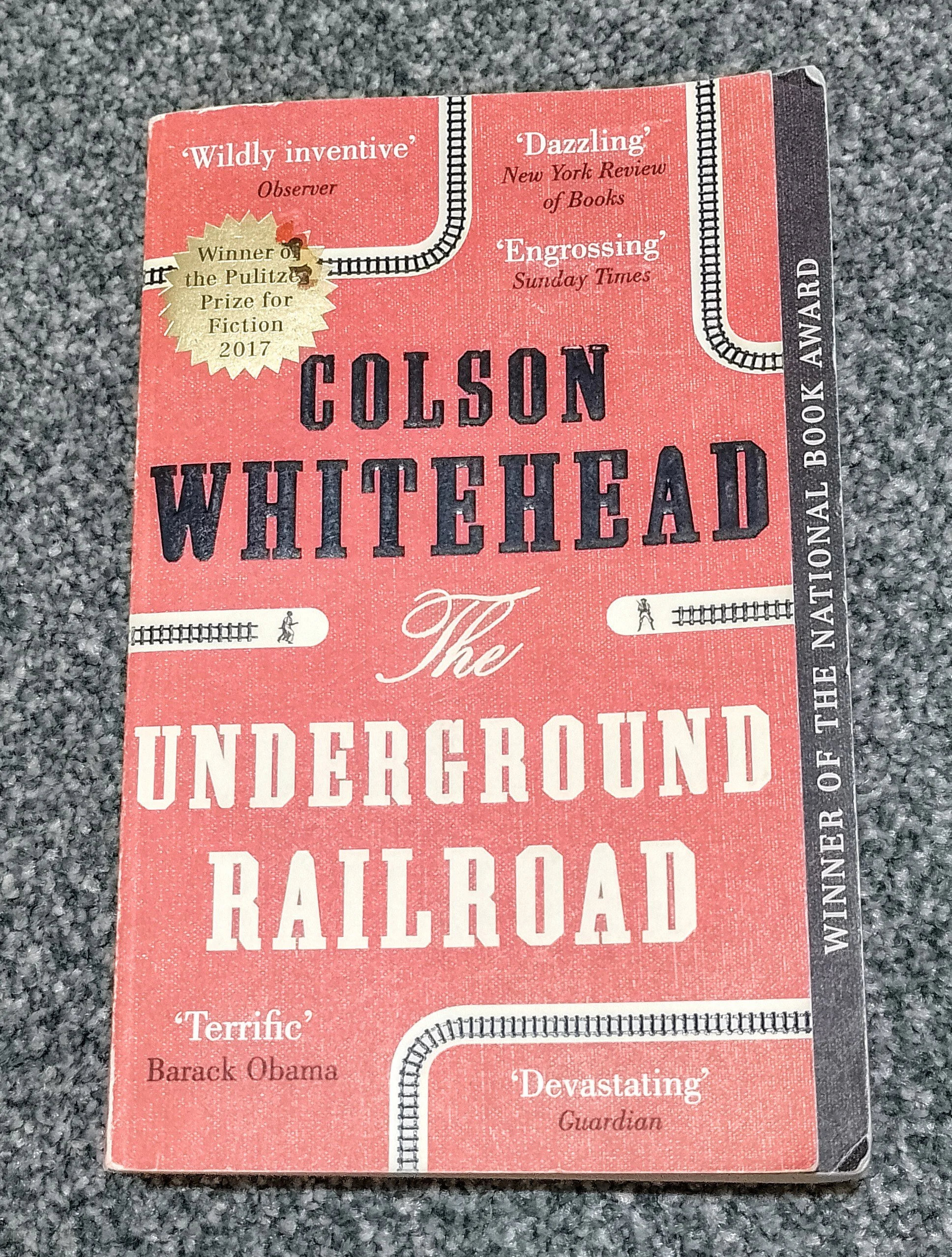
Tracy Chevalier is my favourite historical novelist, and of all her books, my favourite is The Last Runaway, which tells the story of a young Quaker woman who emigrates to America and becomes involved with the Underground Railroad. This complex network of people and infrastructure helped hundreds of thousands of runaway slaves to escape their servitude. It operated from the 1780’s until emancipation in 1863. Before reading ‘The Last Runaway,’ I’d never heard of the Underground Railroad. So I was delighted to see, in the community library cupboard in my street, Colson Whitehead’s Pulitzer prize-winning, The Underground Railroad. I helped myself.
It's a compelling and, at times, harrowing narrative about Cora, a young female slave assisted by the Underground Railroad. I found it well written, with a gripping plot and well-developed characters. The only thing I didn't like was that, on a few occasions, the structure seemed unnecessarily complex, which didn't serve the storytelling. The novel has been adapted for TV and is available on Amazon Prime.
I felt humbled to learn about the thousands of freed slaves and white sympathisers who collaborated to facilitate the escape of the desperate runaways, often at the cost of their own lives. Their work included actually building a secret underground railway, which served parts of the route to freedom.
Reading this in the lead-up to Christmas brought to mind my favourite carol, 'O Holy Night,' whose last verse reads:
Truly he taught us to love one another,
His law is love and his gospel is peace.
Chains shall he break, for the slave is our brother
And in his name all oppression shall cease.
[Words Placide Cappeau, Music Adolphe Adam]
I often can't get through those words without choking up. I believe they will be fully realised at Jesus’ Second Coming, to which we look forward during Advent. But in the meantime, let's emulate the courageous men and women of the Underground Railroad, who worked and prayed for the end of all oppression.