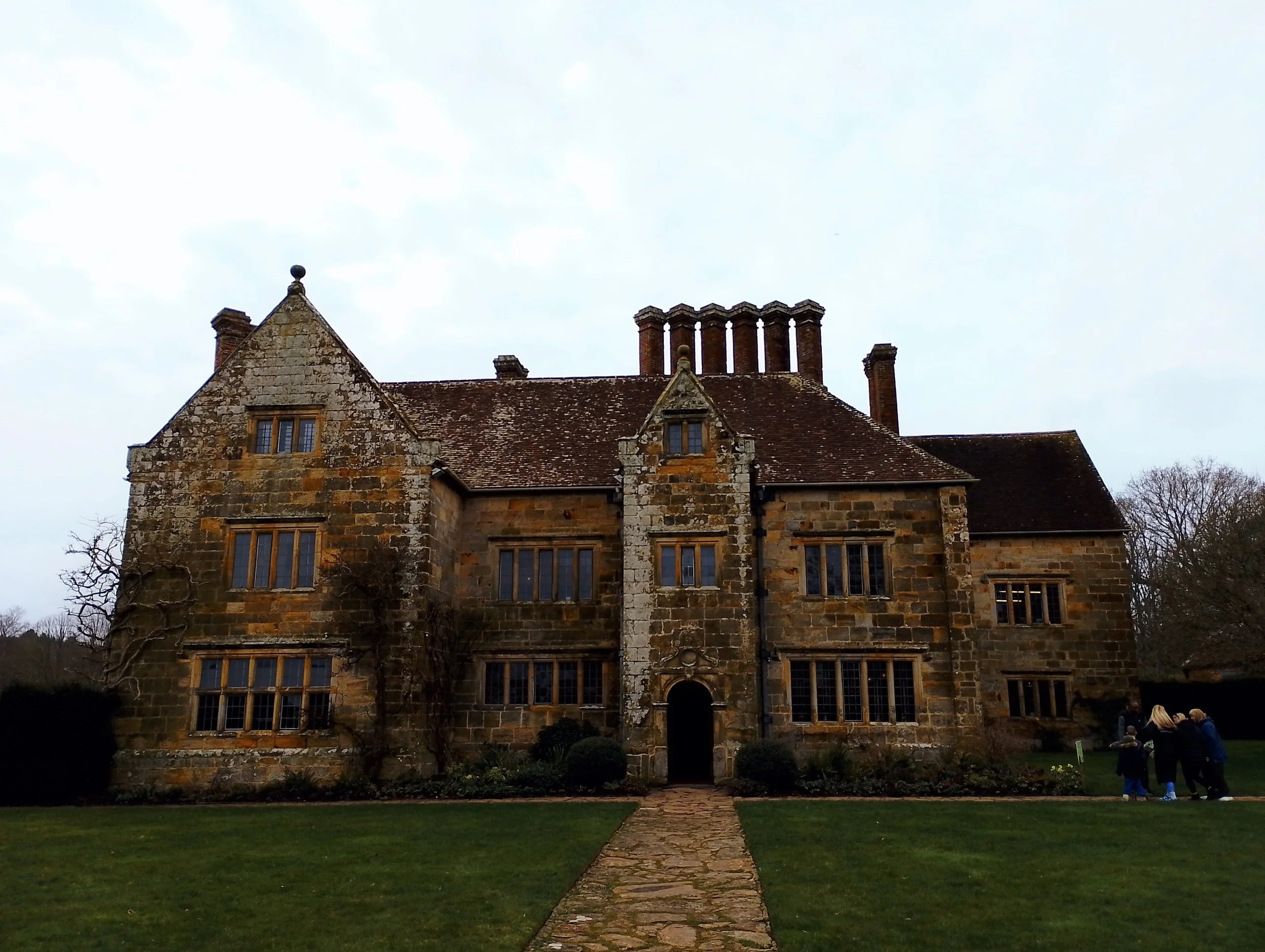
I've wanted to visit Bateman's ever since I heard the story of its purchase on my Rudyard Kipling audio CD, sublimely read by Ralph Fiennes. The 1634 stone house, nestled in its wooded Sussex valley, offered Kipling the retreat he sought from the hurly burly of life as a celebrity author. His wife left it to the National Trust, so when you cross the threshold, you enter Kipling's home as he knew it.
'You walk up to the porch over a stone paved path laid down in the turf and the cart road runs within 50 yards of the front door. The rest is all fields and farms and to the southward one glorious sweep of woods.' R Kipling
Kipling (1865 - 1936) was a man of his time and espoused some entitled, imperialist views we rightly find offensive nowadays. But whenever we begin to judge historical figures, I call to mind Jesus' warning that with the measure we use to judge others, we ourselves will be judged. What will future generations make of us, I wonder?
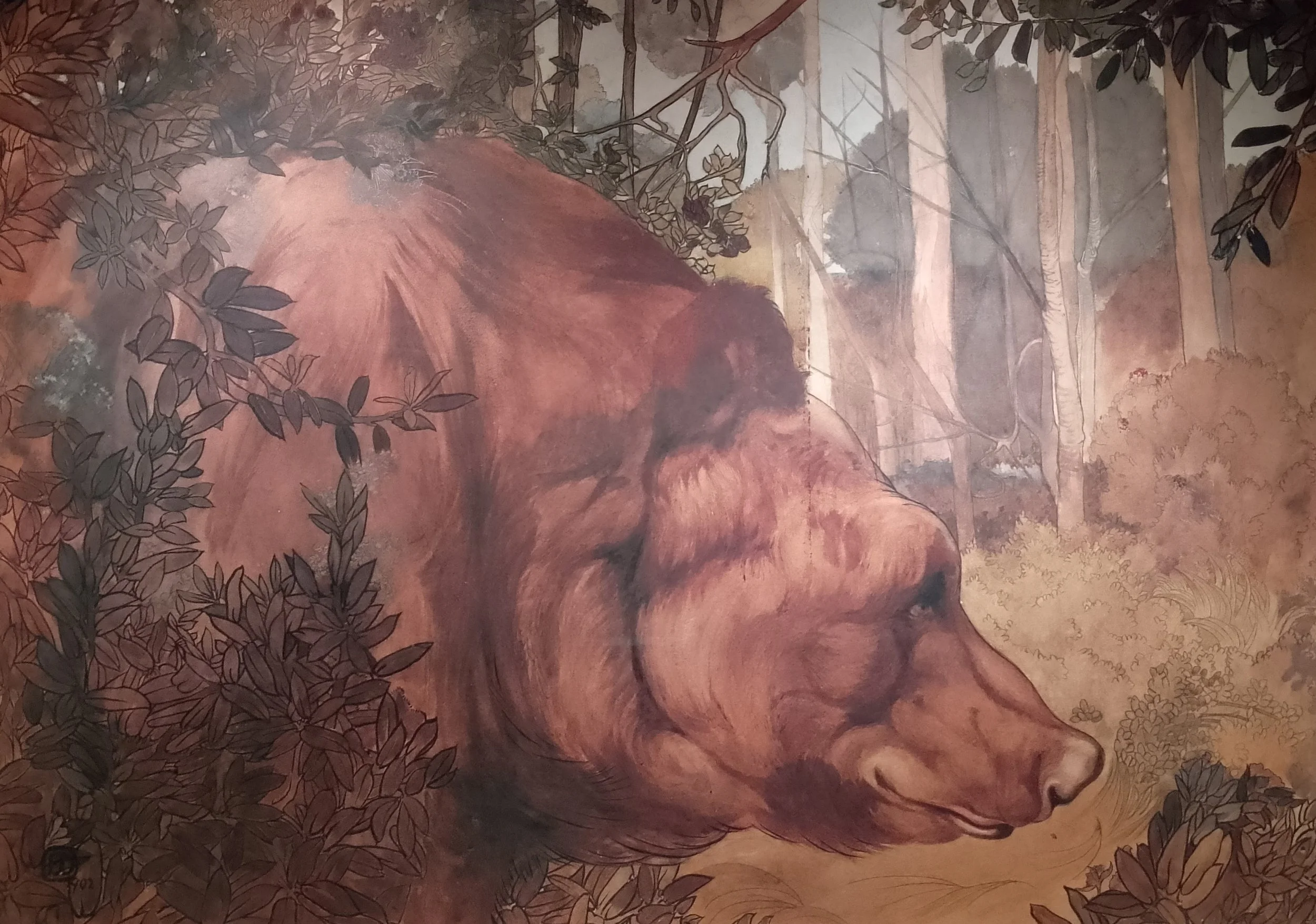
Baloo, The Jungle Book, 1894
Most of the rooms remain as they were in Kipling's time, furnished in keeping with the age of the house, aesthetically influenced by the Arts and Crafts movement, with which Kipling was connected via his aunt’s husband, Edward Burne Jones. The master bedroom hosts an exhibition on Kipling’s life. It features original illustrations from The Jungle Book and Kim; insights into Kipling's childhood (born in India, educated in England, separated from his parents, enduring years of abuse at the hands of his foster family); his return to India; early writing career as a journalist in Lahore, and a moving tribute to his son, John, who died, aged 18, in his first deployment at the Battle of Loos. Next to his sword and posthumous medals lies his original final letter home - a chipper, chatty letter ending with unutterable pathos,
'This will most likely be my last letter for some time, as we won't get any time for writing this next week, but I will try and send field postcards.
Well, so long my old dears, dear love, John.
I didn't quite manage to stifle a sob. A cup of tea was definitely required and short step across the courtyard brought us to the café, via the outbuilding hosting Kipling’s splendid 1928 Rolls Royce Phantom. He was a lifelong motor enthusiast and wrote extensively about his adventures and scrapes, beginning with his first car, powered by steam!
For obvious reasons, I love visiting the homes of authors. If you have any to recommend, please share in the comments below.